
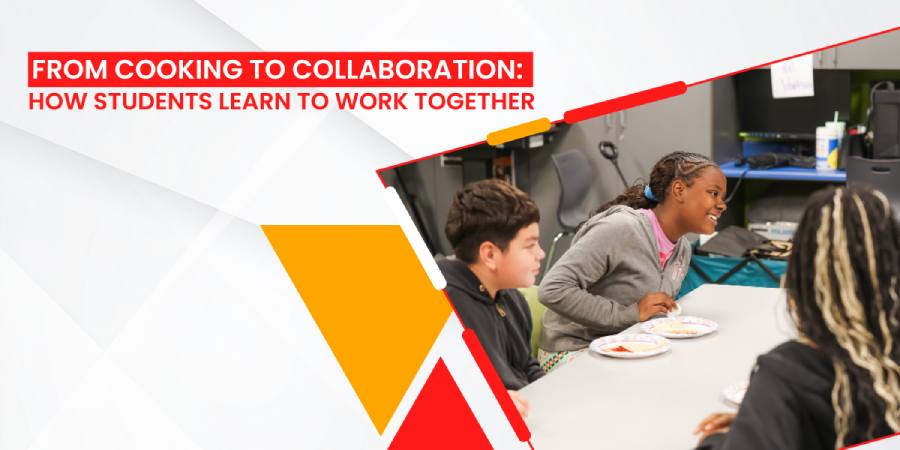
At LIFT Enrichment, we teach kids to cook. But when school districts and educators reflect on the impact, they keep coming back to the same thing: what students are really learning is how to work together.
It turns out that is not a coincidence. If you do a quick Google search for “corporate cooking classes,” you will stumble across something interesting: tens, maybe hundreds, of companies that teach teams of bankers, lawyers, marketers, and C-suite execs how to cook. Why would a Fortune 500 company spend a small fortune putting their star employees through cooking classes? Because they understand something so simple. Shared responsibility builds stronger teams.
What many people overlook is that the same principle applies to students.
If you do a quick Google search for “corporate cooking classes,” you’ll stumble across something interesting: tens, maybe hundreds, of companies that teach teams of bankers, lawyers, marketers, and C-suite execs how to cook. Why, you ask, would a Fortune 500 company spend a small fortune putting their star employees through cooking classes?
Because they understand something so simple. Shared responsibility builds stronger teams.
Of course, building teamwork isn’t just something we see in cooking classes for the corporate world. It’s a huge benefit we see in our own cooking classes for kids, too.
What many people overlook is that the same principle applies to students.
A professional kitchen runs on coordination. Every person has a role. Every task connects to another. Timing matters. If one station falls behind, the entire dish is affected.
While our afterschool culinary program is far more relaxed than a restaurant kitchen, the structure remains. Students are assigned responsibilities. They measure. They chop. They stir. They monitor timing.
The dish only succeeds when everyone contributes. That is teamwork in action.
In many group projects, collaboration feels abstract. In the kitchen, the outcome is tangible. There is one recipe. One skillet. One finished dish.
If ingredients are not prepared correctly, everyone notices. If seasoning is adjusted thoughtfully, everyone benefits. That immediate feedback teaches accountability in a way worksheets cannot.
Teamwork does not develop in chaos. It develops in structured environments where expectations are clear. In our afterschool culinary program, chef instructors establish safety guidelines, assign roles, and guide communication.
Students learn how to wait their turn. How to offer help. How to give and receive feedback. How their actions affect the group.
These are not abstract leadership lessons. They are practiced behaviors.
There is also something uniquely bonding about preparing food together. Humans have gathered around shared meals for centuries. When students cook side by side and then share what they prepared, collaboration becomes personal.
They are not just completing an assignment. They are contributing to something everyone experiences together. That shared accomplishment builds trust. And trust is the foundation of teamwork.
We regularly hear from educators that students who are reserved in traditional settings become more engaged in culinary workshops. Participation is built into the structure. Roles are clear. The outcome matters. Everyone shares in the result.
Teamwork is not taught through lectures. It is built through shared responsibility.
If you are interested in strengthening collaboration within your Expanded Learning program and want to explore how an afterschool culinary program could work at your school, you can book a free call with our team using the link below.
Previous Newsletters:
How to Get Even the Pickiest Students to Try New Food, The almost magical benefits of “ordinary” family dinners, Behind the scenes of filming recipes from LIFT Enrichment’s cookbooks